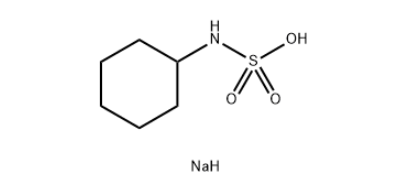
Sodium N-cyclohexylsulfamate #CAS139-05-9
CAS Number:139-05-9
Chemical Formula:C6H14NNaO3S
Synonyms:
assurgrinfeinsuss
asugryn
cyclohexanesulphamicacid,monosodiumsalt
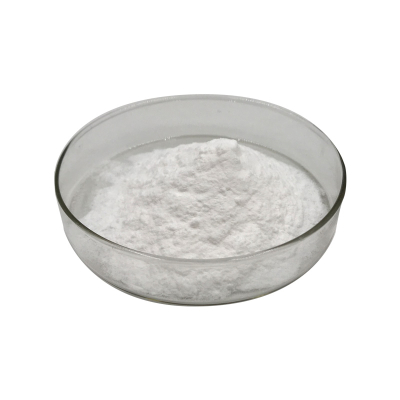
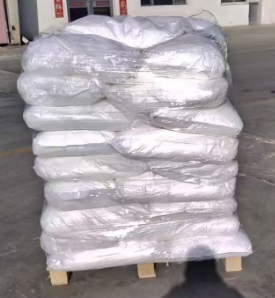
Appearance:White Powder
MOQ (Minimum Order Quantity): 1 FCL (Full Container Load)
Sodium N-cyclohexylsulfamate #CAS139-05-9
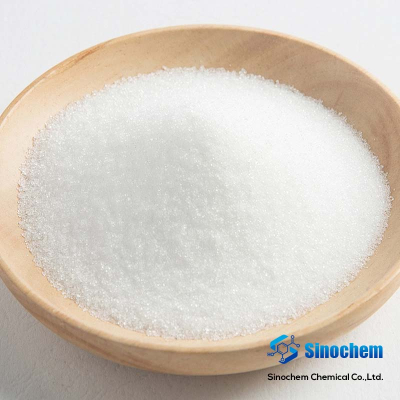
Sodium cyclamate occurs as white, odorless or almost odorless crystals, or as a crystalline powder with an intensely sweet taste.
Cyclamate was first synthesized in 1937. Like the other sweeteners, its sweet taste was accidentally discovered (U.S. Pat. 2,275,125 (Mar. 3, 1942), L. F. Andrieth and M. Sveda (to E. I. du Pont de Nemours & Co., Inc.). The FDA in 1958 classified sodium cyclamate as a GRAS sweetener. In 1969, a 2-year chronic toxicity study with a sodium cyclamate–sodium saccharin (10:1) mixture found bladder tumors in rats. The FDA took cyclamate off the GRAS list, banning it from foods and beverages, but permitting its sale in pharmacies. In 1970, after a congressional investigation, the FDA banned the use of cyclamate entirely. Abbott Laboratories, which has conducted additional toxicity and carcinogenicity studies with cyclamate, a 10:1 mixture of cyclamate–saccharin, and cyclohexylamine, claimed to be unable to confirm the 1969 findings. Abbott then filed a food additive petition for cyclamate in 1973, which was denied by the FDA in 1980. In 1982, the Calorie Control Council and Abbott Laboratories filed a second food additive petition containing the results of additional safety studies (The Calorie Control Council and Abbott Laboratories, Food Additive Petition for cyclamate 2A3672 (Sept. 22, 1982). That petition remains active.
Applicaion of Sodium N-cyclohexylsulfamate
Sodium Cyclamate is an artificial sweetener and is 30 times as saccharose's. It is widely used in pickles, seasoning sauce, cakes, biscuits, bread, ice cream, frozen sucker, popsicles, drinks and so on, with a maximum amount of 0.65g/kg. Secondly, it is used in confect, with a maximum amount of 1.0g/kg. Thirdly, it is used in orange peel, preserved plum, dried arbutus and so on, with the largest amount of 8.0g/kg. It is also used in cosmetics and pharmaceutical industry.
Cyclamate (cyclohexylsulfamic acid and its calcium and sodium salts) were discovered in the United States in 1937. They are 30 to 80 times as sweet as sucrose and were widely used until late 1969, when it was banned by the FDA because of questions on safety. It is not banned in Canada and the European Union.
Cyclamate is produced by reacting cyclohexylamine with sulfonating agents, followed by reactions with sodium or calcium hydroxides to produce cyclamates and free cyclohexylamine as follows.
Owing to their good stability, cyclamates are suitable for all applications of intense sweeteners without a significant interfering taste sensation, and are heat stable. The main application of cyclamates is in blends with saccharin in a 10:1 ratio by weight. The mixture is more than twice as sweet as either component alone, making them an important sweetener in countries approving the use of both sweeteners.
| Sodium N-cyclohexylsulfamate Chemical Properties |
| Melting point | >300 °C (lit.) |
| density | 1.58[at 20℃] |
| vapor pressure | 0.002Pa at 150℃ |
| storage temp. | room temp |
| solubility | 200g/l |
| form | Powder |
| color | White |
| PH | 5.5-7.5 (100g/l, H2O, 20℃) |
| Odor | Odorless. Sweet taste, perceptible at concentrations higher than 100 ppm in water. |
| Water Solubility | >=10 g/100 mL at 20 ºC |
| Merck | 14,2703 |
| BRN | 4166868 |
| Stability: | Hygroscopic |
| Cosmetics Ingredients Functions | FRAGRANCE |
| InChI | 1S/C6H13NO3S.Na/c8-11(9,10)7-6-4-2-1-3-5-6;/h6-7H,1-5H2,(H,8,9,10);/q;+1/p-1 |
| InChIKey | UDIPTWFVPPPURJ-UHFFFAOYSA-M |
| SMILES | [Na+].[O-]S(=O)(=O)NC1CCCCC1 |
| LogP | -2.63 at 20℃ |
| CAS DataBase Reference | 139-05-9(CAS DataBase Reference) |
| IARC | 3 (Vol. Sup 7, 73) 1999 |
| EPA Substance Registry System | Sodium cyclamate (139-05-9) |
| Safety Information |
| Hazard Codes | Xn |
| Risk Statements | 22 |
| Safety Statements | 36/37-24/25 |
| WGK Germany | 3 |
| RTECS | GV7350000 |
| TSCA | TSCA listed |
| HS Code | 2929901000 |
| Storage Class | 11 - Combustible Solids |
| Toxicity | Sodium cyclamate is a non-nutritive sweetener that is about 30 times sweeter than cane sugar. The oral LD50s in rats and mice are 15.25 and 17.0 g/kg, respectively. It was banned as a food additive because of findings that it caused bladder cancer in rodents. It appears to act as a promoter. There is also evidence that it causes toxicity in the male reproductive system. |
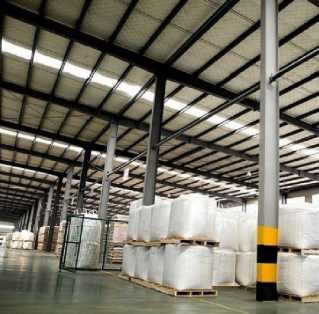
Fact Factory and Equipment Show